
Regulation, Standards & Training
Spray-foam advice can be confusing because law, Building Regulations, retrofit frameworks, industry guidance and trade schemes are often discussed as if they are the same thing. They are not.
Competence is more than a badge
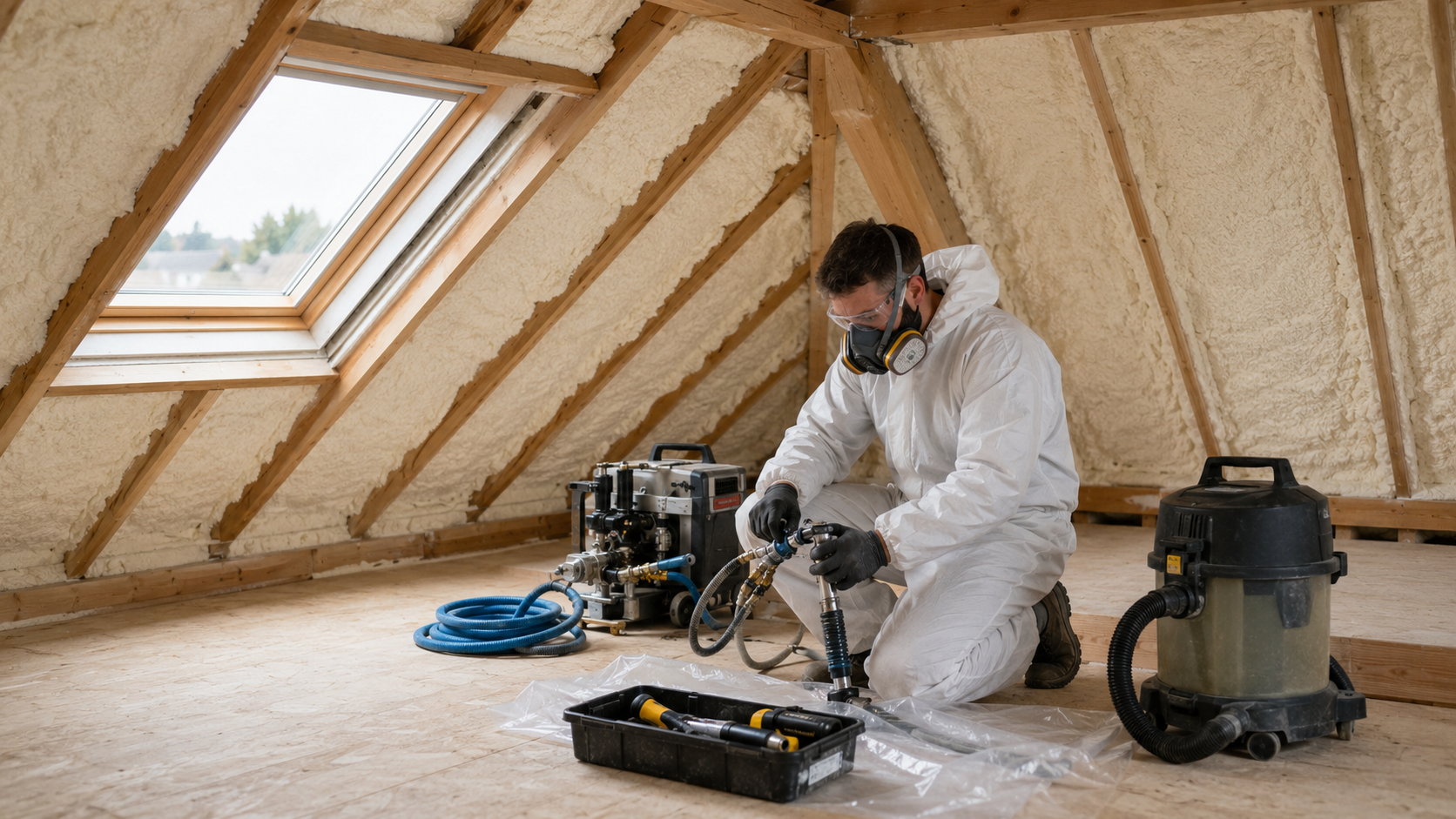
Homeowners should look for suitable training, insurance, safe systems of work, appropriate PPE, dust control, understanding of foam types and awareness of roof construction.
Named memberships, registrations or qualifications should be current and verifiable. Good preparation and a clear method matter just as much as marketing claims.
1. Statutory law
Legal duties can apply to consumer contracts, health and safety, waste handling and trading practices. A contractor should not describe voluntary guidance as legislation.
2. Building Regulations
Construction work may need to consider applicable Building Regulations, ventilation, thermal performance and safe detailing. Requirements depend on the work and property.
3. Retrofit frameworks
PAS 2030, PAS 2035 and related retrofit frameworks may be relevant in some funded or formal retrofit contexts, but not every private spray-foam removal job automatically falls under them.
4. Industry guidance
PCA material should be understood as industry guidance, inspection protocols, registers or schemes as applicable. The PCA is not a government regulator.
5. Trade schemes
Membership of a voluntary trade body or register should only be claimed where it is current and evidenced. This page does not claim Insofix is government, lender, RICS, PCA, TrustMark or PAS approved.
6. Training and competence
Homeowners should look for relevant training, insurance, safe systems of work, suitable PPE and dust control, understanding of foam types, roof-construction awareness and clear scope and exclusions.
7. Verified evidence
Good contractors provide honest before-and-after evidence and documentation for the work completed, while making clear that documentation cannot guarantee lender acceptance.
Questions to ask
- What foam type do you think this is, and how have you assessed it?
- What are the risks to timbers, felt or membranes?
- What is excluded from your scope?
- What evidence will I receive afterwards?
Request a Free Remote Photo Review
Start with photographs and background information. If the issue cannot be assessed remotely, Insofix will explain whether a chargeable on-site assessment is the sensible next step.