
Open-Cell Spray Foam Removal
Open-cell foam is usually lighter and less dense than closed-cell foam, but removal still needs planning around the roof build-up and accessible condition.
Start with safe photographs if available. There is no charge for the initial remote review; if an on-site assessment is appropriate, we will explain any charges before proceeding.
Controlled work starts with the roof and foam
The appropriate method depends on the foam, how strongly it is bonded, the roof construction, safe access and the condition of materials that can be seen.
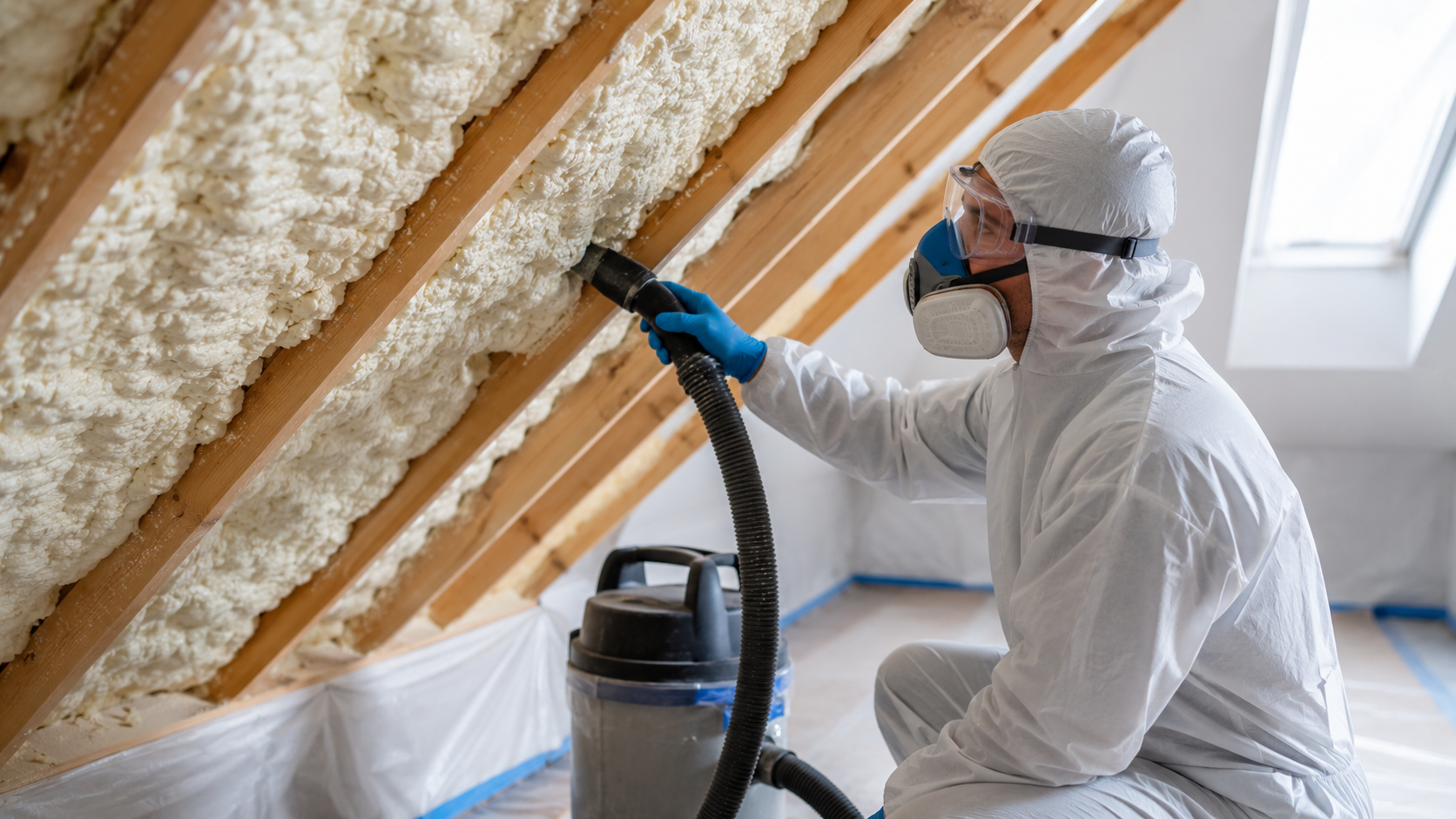
Containment, suitable PPE, dust control and careful handling should be planned for the property rather than treated as a one-size-fits-all process.
Typical characteristics
Open-cell foam is often softer and more flexible than closed-cell foam. It may still be bonded to rafters, felt, membranes and services, so the installation and construction matter.
Method depends on the roof
Removal methods vary with foam depth, adhesion, access, substrate condition and whether the roof includes older felt, modern membranes or non-standard detailing.
Protecting timbers and membranes
Controlled removal should prioritise avoiding unnecessary damage to roof timbers, felt and membranes. Aggressive shortcuts can create new problems.
Waste and dust control
Work should be planned with appropriate PPE, containment, dust control, bagging and waste handling for the material and site conditions.
Inspection after exposure
Removing foam can improve access to previously hidden areas. It does not guarantee that every concealed component is sound, especially where areas remain inaccessible.
Related guidance
If foam is dense, strongly bonded or on an older roof, read the closed-cell foam and older roofs guidance before assuming a simple removal route.
Request a Free Remote Photo Review
Start with photographs and background information. If the issue cannot be assessed remotely, Insofix will explain whether a chargeable on-site assessment is the sensible next step.